Welcome Doctor

daily mcqs

Popular mcqs

Showing posts with label repeatedly asked. Show all posts

carpal tunnel

Written By Unknown on Thursday, 13 October 2011 | 02:56


The carpal tunnel contains all of the following important structures
except:
A. Median nerve.
B. Flexor pollicis longus.
C. Flexor carpi radialis.
D. Flexor digitorum superficialis.
Ans. C
02:56 | 0 comments | Read More

Wilm’s tumour

Written By Unknown on Monday, 10 October 2011 | 06:47


Wilm’s tumour may be associated with all except – 
a)Genitourinary anomalies
 
b)Beckwith’s syndrome
 
c)Aniridia
 
d)Glaucoma
Ans. is ‘d’ i.e., Glaucoma [Ref Patho Robins 7e p. 504, 505 & 6e p. 488 ]
Wilms’ tumor is the most common primary renal tumor of childhood, usually diagnosed between the ages of 2 and 5 years.
Neuroblastoma is one of the most common childhood solid tumors and is the most common tumor diagnosed in infants less than 1 year of age
Neoplasms that exhibit sharp peaks in incidence in children younger than 10 years of age include (1) leukemia (principally acute lymphoblastic leukemia); (2) neuroblastoma; (3) Wilms’ tumor; (4) hepatoblastoma; (5) retinoblastoma; (6) rhabdomyosarcoma; (7) teratoma; (8) Ewing sarcoma; and, finally, posterior fossa neoplasms–principally (9) juvenile astrocytoma, (10) medulloblastoma, and (11) ependymoma
Hemangiomas: (benign) are the most common tumors of infancy.
WILMS TUMOUR— 
The risk of Wilms’ tumor is increased in association with at least three recognizable groups of congenital malformations exhibiting aberrations in at least two distinct chromosomal loci.
 
1.The first group of patients have the WAGR syndrome characterized by
 aniridia, genital anomalies, and mental retardation and have a 33% chance of developing Wilms’ tumor. 
2.A second group of patients at risk for Wilms’ tumor have the Denys-Drash syndrome, which is characterized by gonadal dysgenesis (male pseudohermaphroditism) and nephropathy leading to renal failure. The majority of these patients develop Wilms’ tumors.
 
3.Clinically distinct from these previous two groups of patients but also having an increased risk of developing Wilms’ tumor are those children with
Beckwith-Wiedemann syndrome, characterized by enlargement of body organs, hemihypertrophy, renal medullary cysts, and abnormal large cells in adrenal cortex (adrenal cytomegaly). 

06:47 | 0 comments | Read More

prion

Written By Unknown on Saturday, 8 October 2011 | 12:24


Which of the following is NOT a prion 

disease?

a) Bovine spongiform encephalopathy

b) Transmissible mink encephalopath
y

c) Scrapie

d) Progressive multifocal 

leucoencephalopathy

Correct answer : d) Pr
ogressive multifocal leucoencephalopathy
12:24 | 0 comments | Read More

hiv aids


Chemokine co-receptor for HIV found on 

macrophage is

a) CD4


b) CD8


c) CCR5


d) CXCR4

Correct answer : c) CCR5
12:21 | 0 comments | Read More

foramen magnum

Written By Unknown on Thursday, 6 October 2011 | 07:11


Which of the following passes through
the foramen magnum
A. Vertebral artery
B. Sympathetic chain
C. XIth cranial nerve
D. Internal carotid artery
Ans: A. Vertebral artery
07:11 | 0 comments | Read More

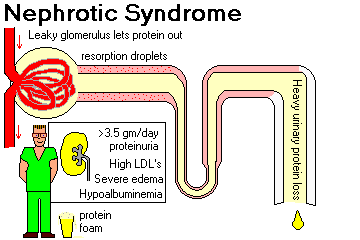
nephrotic syndrome

Written By Unknown on Saturday, 10 September 2011 | 03:42

Nephrotic syndrome is caused by all except —
a) Malaria 
b) Penicillamine
 
c) Syphilis
 
d) Shock
 
Ans is D


CAUSES OF NEPHROTIC SYNDROME in order of frequency- 
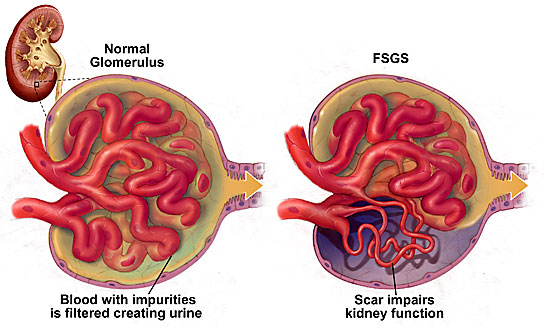
Primary Glomerular Disease-Membranous glomerulonephritis,Lipoid nephrosis,Focal segmental glomerulosclerosis,Membranoproliferative glomerulonephritis,Other proliferative glomerulonephritis (focal, “pure mesangial,” IgA nephropathy)
 

Systemic Diseases–Diabetes mellitus,Amyloidosis,Systemic lupus erythematosus,Drugs (gold, penicillamine, “street heroin”).


Infections (malaria, syphilis, hepatitis B, acquired immunodeficiency syndrome) 
Malignant disease (carcinoma, melanoma)
Miscellaneous (bee-sting allergy, hereditary nephritis) 
robbins 953 6th ed


03:42 | 0 comments | Read More

diabetes

Charactersitic feature of kidneys in diabetes mellitus is —(Al 89) 
a)Nodular sclerosis 
b)Fibrin cap
 
c)Papillary necrosis
 
d)Difuse glomendosclerosis
 
Ans is A…
03:36 | 0 comments | Read More

diabetes


Kimmelstiel-wilson disease is diagnostic of
a)Diabetic glomerulosclerosis
 
b)Hypertension benign
 
c)Malignant hypertension
 
d)Amyloidosis
 

ANS IS A
03:35 | 0 comments | Read More

glomerulosclerosis

1.Glomerulosclerosis is a feature of -
a) Diabetes mellitus
b) Hypertension
c) Acute glomerular
d) Nephrotic syndrome
Ans is A


The kidneys are prime targets of diabetes. Renal failure is second only to myocardial infarction as a cause of death from this disease. Three lesions are encountered: (1) glomerular lesions; (2) renal vascular lesions, principally arteriolosclerosis; and (3) pyelonephritis, including necrotizing papillitis. 
The most important glomerular lesions are capillary basement membrane thickening, diffuse glomerulosclerosis, and nodular glomerulosclerosis. 
03:29 | 0 comments | Read More

sle

Written By Unknown on Wednesday, 7 September 2011 | 23:13


A girl aged 19, presents with arthritis and a photosensitive rash on the
cheek. Likely diagnosis is:
A. SLE
B. Chloasma
C. Stevens Johnson syndrome
D. Lyme’s disease
Ans. A
23:13 | 0 comments | Read More

alopecia


A man aged 50 years presents with, alopecia, boggy scalp swelling and
easily pluckable hair. Next step in establishing the diagnosis would be:
A. KOH smear
B. Culture sensitivity
C. Biopsy
D. None of the above
Ans. A
23:08 | 0 comments | Read More

esophageal varices


Ramu, a 8-years-old boy presents with upper GI bleeding. On examination,
he is found to have splenomegaly; there are no signs of ascites, or
hepatomegaly; esophageal varices are found on UGIE. Most likely diagnosis is:
A. Budd Chiari syndrome
B. Non cirrhotic portal fibrosis
C. Cirrhosis
D. Veno-occlusive disease
Ans. B
22:54 | 0 comments | Read More

triage


Triage means:
A. Sorting out of cases on availability of medical resources and severity of
patient’s condition
B. Patients are divided into 3 groups
C. Severely injured patients are attended first in military camps
D. None of the above
Ans. A
22:41 | 0 comments | Read More

tuberculosis


Characteristic finding in CT in a TB is:
A. Exudate seen in basal cistern
B. Hydrocephalus is non communicating
C. Calcification commonly seen in cerebellum
D. Ventriculitis is a common finding
Ans. A
22:39 | 0 comments | Read More

ippv


IPPV can cause:
A. Barotrauma
B. Pleural effusion
C. Increased venous return
D. None of the above
Ans. A
22:39 | 0 comments | Read More

myasthenia gravis


Which of the following is not associated with thymoma:
A. Red cell aplasia
B. Myasthenia gravis
C. Hypergammaglobulinemia
D. Compression of the superior mediastinum
Ans. C
22:30 | 0 comments | Read More

cushing"s syndrome


A patient with Cushingoid features presents with hemoptysis. He shows no
response to dexamethasone suppression test. Most likely diagnosis is:
A. Adrenal hyperplasia
B. Adrenal adenoma
C. CA lung with ectopic ACTH production
D. Pituitary microadenoma
Ans. C
22:29 | 0 comments | Read More

migraine


A woman complains of headache associated with paresthesias of the right
upper and lower limb. Most likely diagnosis is:
A. Trigeminal neuralgia
B. Glossopharyngeal neuralgia
C. Migraine
D. Cluster headache
Ans. C
22:27 | 0 comments | Read More

tocolytic

Written By Unknown on Monday, 5 September 2011 | 11:38

Not a tocolytic

a. Misopristol
b. magnesium sulfate
c. beta blockers
d. indomethacin

answer : a . misoprostol 
11:38 | 0 comments | Read More

migraine

Written By Unknown on Sunday, 4 September 2011 | 03:42


A female aged 30 years, presents with episodic throbbing headache for
past 4 years with nausea and vomiting. Most likely diagnosis is:
A. Migraine
B. Cluster headache
C. Angle closure glaucoma
D. Temporal arteritis
Ans. A
03:42 | 0 comments | Read More
Related Posts Plugin for WordPress, Blogger...